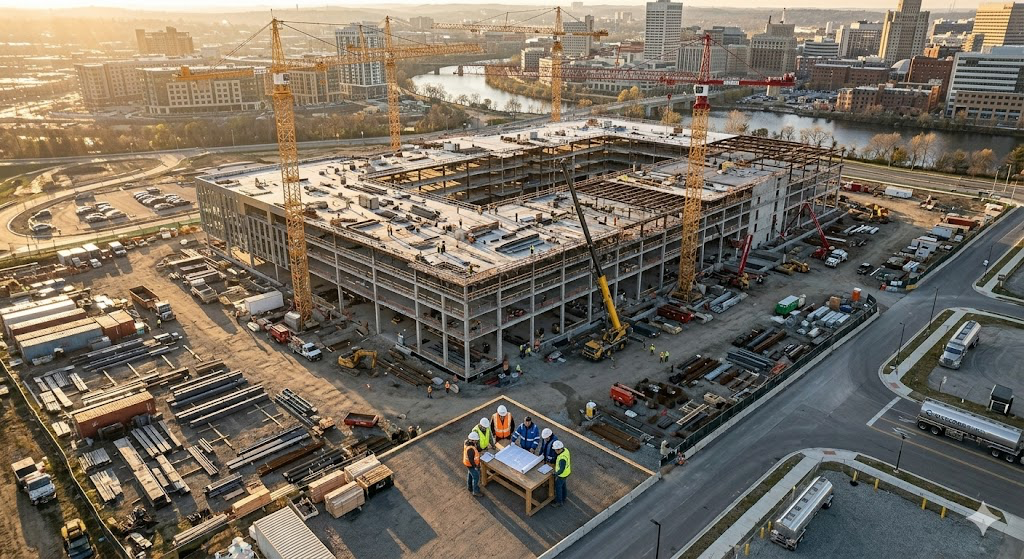
A contractor wins a government bid nobody expected them to win. The project is worth $8 million, the deadline is firm, and the client has never worked with this company before. What gives the client the confidence to hand over that contract? Not a handshake. Not a reputation alone. A construction bond.
What Is a Construction Bond?
A construction bond is a surety bond that guarantees a contractor will fulfill the obligations of a construction contract. It protects the project owner against financial loss resulting from non-payment, contractor default, substandard work, or failure to complete the project. Construction bonds are also called contract bonds because they tie the bond’s guarantee directly to the terms of the contract itself.
Unlike insurance — which protects the insured party from unforeseen losses — a construction bond protects the project owner, not the contractor. Think of it less like insurance and more like a co-signed loan. When a contractor fails to perform, the bonding company steps in to remedy the situation. But the contractor always remains financially responsible. The surety will recover every dollar it pays out, plus interest and fees, through the indemnity agreement the contractor signs when the bond is issued.
This distinction is one of the most misunderstood points in construction finance. Bonds and insurance serve different purposes, cover different parties, and operate under entirely different mechanisms. Understanding the difference is essential for every contractor, project owner, and anyone involved in the construction bidding process.
The Three Parties in Every Construction Bond
Every construction bond is a three-party agreement.
| Party | Role |
|---|---|
| Principal | The contractor purchasing the bond and taking on the contractual obligation |
| Obligee | The project owner or government agency requiring and protected by the bond |
| Surety | The bonding company that guarantees the principal’s performance |
The contractor pays a premium to the surety. The surety issues the bond to protect the obligee. If the contractor defaults, the obligee files a claim. The surety investigates and, if the claim is valid, steps in to remedy the situation — either by financing the original contractor to finish the work, hiring a replacement contractor, or compensating the obligee directly. The surety then pursues the principal for full reimbursement.
This structure creates accountability at every level. The surety has a financial incentive to ensure the contractor performs, because if they do not, the surety is paying out of pocket. The contractor has an incentive to perform because they know they cannot walk away from a bond claim without significant financial and reputational consequences.
Why Construction Bonds Exist
Construction contracts offer project owners a degree of protection on paper. But pursuing a breach of contract through the courts is slow, expensive, and uncertain. When millions of dollars are at stake and a project deadline cannot move, waiting for a lawsuit to resolve is not a viable option.
Construction bonds solve that problem by creating an immediate financial backstop. Research by Ernst & Young commissioned by the Surety & Fidelity Association of America found that unbonded construction projects with contractor defaults have 85% higher completion costs than projects protected by surety bonds. The bonds also result in lower default rates and faster project completion. For both public and private project owners, the value of requiring construction bonds far exceeds their cost.
When Are Construction Bonds Required?
At the federal level, the Miller Act requires performance bonds and payment bonds on all federal construction contracts exceeding $150,000. Every state has its own version — commonly called Little Miller Acts — that impose similar requirements on state and local government projects. Thresholds and specific bond types vary by state, but the principle is uniform: public money requires bond protection.
On private projects, no law mandates construction bonds. But many sophisticated private owners — particularly developers, lenders, and institutional clients — require them anyway, especially on large-scale, complex, or high-value projects. A lender financing a commercial construction loan may require bonds as a condition of funding. A private school district building a new campus may require them as a condition of the contract.
General contractors can also require subcontractors to provide bonds on their portion of the work, passing the protection layer down through the project hierarchy.
Types of Construction Bonds
Construction bond is a broad term covering several distinct bond types, each protecting a different phase or aspect of a project. Many projects require more than one type.
| Bond Type | What It Protects | When It’s Required |
|---|---|---|
| Bid Bond | Owner against contractor backing out after winning the bid | Before bid opening on public projects |
| Performance Bond | Owner against contractor failing to complete work per contract | At contract award; typically 100% of contract value |
| Payment Bond | Subcontractors and suppliers against non-payment by the GC | At contract award; typically 100% of contract value |
| Maintenance / Warranty Bond | Owner against post-completion defects in workmanship or materials | After project completion; typically 1–2 years |
| Mechanics Lien Bond | Owner against property liens filed by unpaid parties | After a lien is filed; removes lien from property to bond |
| Subdivision Bond | Municipality against developer failing to complete public infrastructure | Before subdivision plat approval |
| Supply Bond | Owner or GC against supplier failing to deliver materials per contract | Before major material procurement on public projects |
| Completion Bond | Owner against project not being completed on time, within budget, and lien-free | Large, complex, or lender-financed projects |
| Retention Bond | Owner or GC against incomplete work when retainage is released early | When subcontractor requests early release of withheld retainage |
Bid Bond. A bid bond guarantees that if a contractor wins a bid, they will sign the contract and provide the required final bonds. If the contractor backs out after winning, the surety compensates the owner for the difference between the winning bid and the next lowest bid. Bid bonds are typically set at 5–10% of the bid amount. On public projects, a missing bid bond usually means the bid is not even opened.
Performance Bond. Once a contract is awarded, the performance bond takes over. It guarantees the contractor will complete the project according to the contract terms and specifications. Performance bonds are typically set at 100% of the contract value. If the contractor defaults, the surety has three options: finance the original contractor to finish, hire a replacement contractor, or compensate the owner directly. After resolving the claim, the surety pursues the contractor for full reimbursement.
Payment Bond. The payment bond guarantees that subcontractors, suppliers, and laborers will be paid for their work and materials. This bond is critical on public projects because government property cannot be liened — the payment bond gives subs and suppliers the same financial recourse they would otherwise have through a mechanics lien on private property. Like performance bonds, payment bonds are typically set at 100% of the contract value.
Maintenance and Warranty Bond. This bond covers defects in workmanship or materials discovered after the project is completed. It is typically required for one to two years after substantial completion and is common on public infrastructure projects such as sewer lines, water mains, and roadways. Some sureties include the first year of maintenance coverage at no additional charge when issuing performance and payment bonds together.
Mechanics Lien Bond. When a contractor or supplier files a mechanics lien against a property — typically due to a payment dispute — a mechanics lien bond removes that lien from the property and attaches it to the bond instead. This keeps the project moving, allows the property to be sold if needed, and resolves the dispute through the bond rather than through the property title.
Completion Bond. A completion bond guarantees the project will be delivered on time, within budget, and free of liens. It differs from a performance bond in that it covers the project as a whole, not just a specific contract. Both can be required on the same project. Lenders often require completion bonds as a condition of financing.
Retention Bond. Retainage is the common practice of withholding a portion of payment — often 5–10% — until a project is fully complete. A retention bond allows a subcontractor to receive their full progress payment immediately by posting a bond guaranteeing the work will be completed. This can significantly improve a subcontractor’s cash flow over the life of a long project.
How Construction Bonds Are Underwritten: The Three C’s
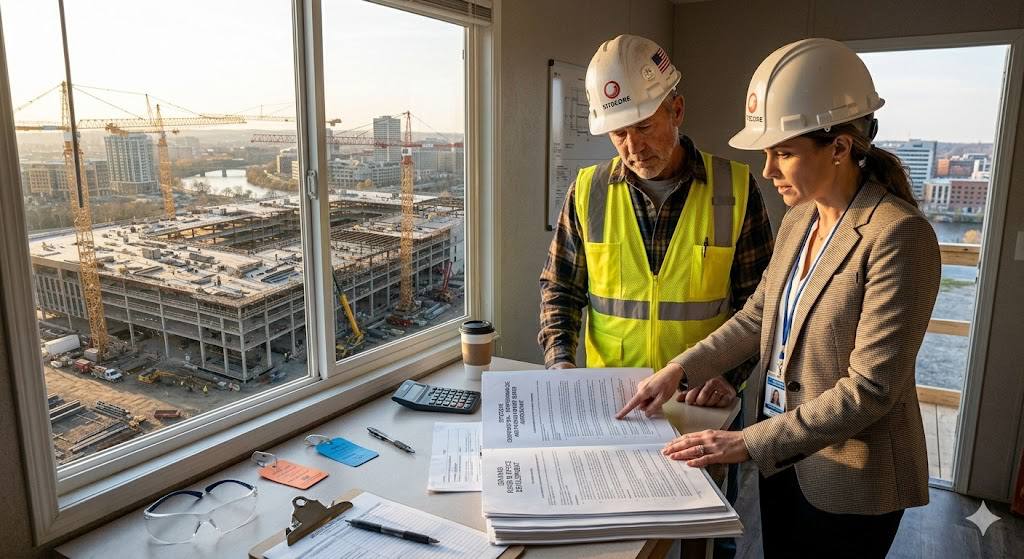
Getting bonded is not automatic. Surety companies put their own capital on the line when they issue a bond, so they evaluate every applicant carefully. The construction bonding industry assesses contractors using a framework known as the Three C’s.
Character examines the contractor’s reputation, integrity, and track record. Have they completed projects on time? Do they have a history of disputes or claims? Are they known for honoring their commitments to subcontractors and suppliers?
Capacity evaluates whether the contractor has the skills, equipment, personnel, and management depth to complete the specific project being bonded. A contractor with ten successful $500,000 projects is not automatically qualified for a $10 million project.
Capital reviews the contractor’s financial health — credit score, financial statements, cash flow, working capital, and debt levels. This is typically the most heavily weighted factor. Surety companies may require CPA-prepared financial statements, income tax returns, accounts receivable aging schedules, and work-in-progress (WIP) reports.
Bonding capacity — the maximum total bond exposure a surety will extend to any one contractor at any one time — is not unlimited. A contractor approaching their bonding capacity may be unable to bid new projects until existing bonded work is completed. Building bonding capacity over time is one of the most important strategic goals for any contractor who wants to pursue larger projects.
How Much Do Construction Bonds Cost?
Construction bond premiums are a percentage of the bond amount, which is typically the contract value. Rates vary by bond type, contractor financial profile, project complexity, and the contractor’s existing relationship with the surety.
| Contractor Profile | Approximate Premium Rate |
|---|---|
| Established contractor, strong credit and financials | 1%–3% of bond amount |
| Newer contractor or weaker financials | 3%–5% of bond amount |
| Poor financial history or credit challenges | 5%–15%+ of bond amount |
For a $1 million project, a contractor with excellent financials might pay $10,000–$30,000 in bond premiums. That cost is almost always factored into the contractor’s bid price, meaning the project owner indirectly pays for it through the total contract amount.
The contractor is responsible for paying the bond premium. Bond premiums are considered a standard cost of doing business for contractors who pursue bonded work.
How to Get a Construction Bond
Getting a construction bond is a clear, step-by-step process when you work with a knowledgeable surety provider. Here is how it works through Swiftbonds:
Apply. Submit your application with information about your contracting business, the type of bond required, the contract value, and the project details. For smaller bonds, personal credit may be the primary qualifying factor and the process can move quickly. Larger bonds require full financial underwriting.
Get your quote. Swiftbonds reviews your application and financials and returns a premium quote. The team will walk you through any additional documentation needed — financial statements, WIP reports, tax returns, or project details — and help you navigate the underwriting process.
Pay your premium. Once you accept the quote, pay the annual or project premium. The bond is then issued. For bid bonds, this typically needs to happen before the bid submission deadline.
File the bond. Swiftbonds delivers your bond documentation, which you file with the project owner, government agency, or obligee requiring it. The contract can then proceed.
Start early. Bid deadlines create real pressure. Pre-qualifying for a surety line of credit before you need a specific bond means you can respond to bid opportunities quickly without scrambling at the last minute.
Swiftbonds LLC
2025 Surety Bond Agency of the Year
4901 W. 136th Street
Leawood KS 66224
(913) 214-8344
https://swiftbonds.com/
Frequently Asked Questions
What is the difference between a construction bond and construction insurance?
They serve completely different purposes. Insurance protects the insured party against unforeseen losses and does not require repayment after a claim. A construction bond protects the project owner, and if a claim is paid, the contractor must reimburse the surety in full. Insurance transfers risk away from the contractor. A bond keeps risk with the contractor while providing the project owner a financial guarantee.
Who pays for a construction bond?
The contractor pays the bond premium, but the cost is almost always included in the bid price. So the project owner is indirectly paying for it through the total contract amount. Bond premiums are a cost of doing business for contractors who pursue bonded work.
Are construction bonds required on private projects?
Not by law on most private projects, but many private owners — especially on large, complex, or high-value projects — require them anyway. Lenders financing construction projects frequently require bonds as a condition of the loan. Any project owner has the right to require bonds regardless of whether a law mandates them.
What is the Miller Act and why does it matter?
The Miller Act is a federal law requiring performance bonds and payment bonds on all federal construction contracts exceeding $150,000. It was enacted to protect taxpayers and subcontractors on government projects. Every state has a similar law — called a Little Miller Act — that applies to state and local government projects, with varying thresholds and requirements.
What happens when a contractor defaults on a bonded project?
The project owner files a claim against the bond. The surety investigates, contacts the principal to verify facts and circumstances, and determines the appropriate response. On a performance bond claim, the surety may hire a new contractor to complete the work, provide funds to the owner to complete it themselves, or compensate the owner for losses. On a payment bond claim, the surety may pay the unpaid subcontractor or supplier directly. After settling the claim, the surety pursues the contractor for full reimbursement.
Can a letter of bondability substitute for an actual bond?
No. A letter of bondability is simply a statement that a surety company could potentially issue a bond for a contractor. It is not a guarantee, and it is not a bond. Always verify that an actual bond certificate has been issued and confirm it directly with the surety company before relying on it as proof of coverage.
Can new or small contractors get bonded?
Yes, though it can be more challenging and more expensive. New contractors typically need to start with smaller bonds, maintain clean financial records, and build a track record of successfully completed projects. The SBA Surety Bond Guarantee Program helps small businesses that may not meet standard surety criteria by guaranteeing bonds for contracts up to $9 million for non-federal work and up to $14 million for federal contracts. The SBA charges a guarantee fee of 0.6% of the contract price for performance and payment bonds and no fee for bid bond guarantees.
Conclusion
Construction bonds are not optional paperwork — they are the financial infrastructure that makes large-scale construction possible. They allow project owners to trust contractors they have never worked with. They allow subcontractors to take on work knowing they have a path to payment even if the GC runs into trouble. They allow the construction industry to function at the scale it does, from neighborhood subdivisions to billion-dollar infrastructure projects, because every party knows that the agreement behind the contract has real financial teeth. Whether you are a general contractor building your bonding capacity, a subcontractor being asked to provide your first performance bond, or a project owner evaluating whether to require bonds on a private project, working with the right surety partner makes the difference between a smooth bonding process and a project stuck at the starting line.
5 Things About Construction Bonds You Will Not Find on Most Surety Websites
The world’s first formal surety bond company was founded in the United Kingdom in 1840, predating the U.S. construction bond industry by decades. American surety bonding for construction grew substantially after the Heard Act of 1894 and the Miller Act of 1935 formalized federal requirements, but the concept of a third party guaranteeing another party’s performance traces back centuries to medieval trade agreements and Roman law.
A bonded contractor’s default has implications that extend well beyond the surety’s immediate financial exposure. When the surety hires a replacement contractor to complete a defaulted project, the replacement typically charges a premium — often 20–40% more than the original contract — because they are inheriting someone else’s problems, incomplete work, and potential disputes. This cost differential is exactly why the EY/SFAA research shows such dramatically higher completion costs on unbonded defaults.
Some surety companies maintain what is called an “obligee list” — a database of project owners, agencies, and lenders whose bond forms they have pre-approved. When a contractor needs a bond for a project with an obligee on this list, the process is faster and smoother. Contractors who repeatedly work with the same project owners benefit from this pre-approval relationship even if they are not always aware it exists.
On design-build projects — where a single entity is responsible for both the design and the construction — construction bonds must be carefully drafted to clarify whether the performance obligation covers design errors as well as construction defects. Traditional performance bonds were written assuming separate design and construction contracts, and applying them to integrated design-build delivery requires specific bond language that many standard forms do not automatically include.
The federal government’s bond threshold of $150,000 has not been adjusted for inflation since the Miller Act was updated in 1999. In 1999 dollars, $150,000 represented a significant project; in today’s dollars, it captures a much broader range of construction work. Industry advocates have periodically argued for raising the threshold to reduce the bonding burden on small contractors on modest federal projects, but the threshold remains unchanged as of 2026.
Leave a Reply