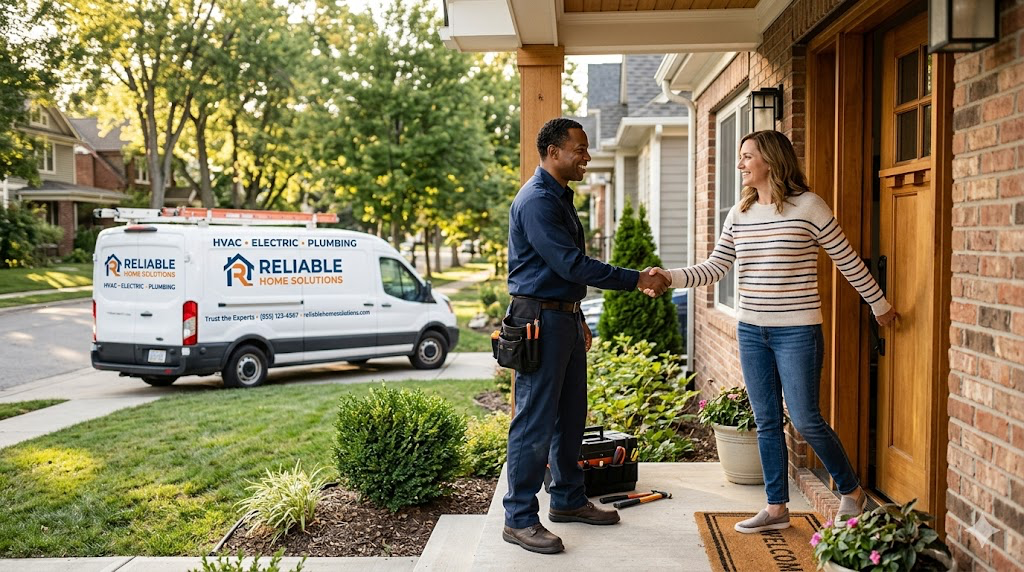
You have seen it on truck doors, business cards, lawn signs, and contractor websites thousands of times: licensed, bonded, and insured. Three words that show up together so often they feel like a single unit — but most business owners and most customers would struggle to explain what any one of them actually means, let alone all three. That gap in understanding creates real risk on both sides of a transaction. Contractors who cannot clearly explain their credentials lose work to competitors who can. Customers who do not know what to look for end up hiring the wrong company and absorbing losses that should have been protected. This guide closes that gap.
What Does Licensed Mean?
Being licensed means a business or individual has obtained the government-issued permits, certifications, or approvals required to legally perform a specific type of work in a specific jurisdiction. A license is not a generic business registration — it is a credential issued by a state agency, licensing board, or local authority that typically requires proof of knowledge, training, testing, or both before it can be granted.
What makes licensing genuinely complex is that requirements vary dramatically by state and by trade. Some states require licenses for general contractors working on any project; others only require licenses for specialty trades such as electrical, plumbing, HVAC, and roofing. Cities and counties layer on their own requirements on top of state rules, meaning a contractor licensed at the state level may still need a separate local permit to pull work in a specific municipality. The same is true across professional services — attorneys, accountants, insurance agents, engineers, architects, automotive dealers, and liquor establishments all face licensing requirements that differ by state, by license type, and sometimes even by the dollar value of the transaction involved.
The consequences of operating without required licenses range from fines and forced shutdown to civil liability. When a licensed technician installs fire alarm equipment, both state fire codes and general safety standards are satisfied. When an unlicensed installer does the same work and a fire causes injury or property damage, the building owner, their neighbors, their employees, and their customers may all have viable civil claims. Licensing is not bureaucracy for its own sake — it is the documented baseline of competence that protects everyone a business comes in contact with.
One practical benefit of being licensed that most people overlook: in many states, a licensed business has legal standing to sue clients who fail to pay. An unlicensed contractor doing the same work may have no remedy in court at all, regardless of how clearly the contract documents the debt.
What Does Bonded Mean?
Being bonded means the business has purchased a surety bond — a financial guarantee instrument backed by a licensed surety company. A surety bond is a three-party agreement involving the principal (the business purchasing the bond), the obligee (the government agency, client, or other party requiring the bond), and the surety (the bonding company that backs the financial guarantee).
Here is the most important thing to understand about being bonded: while bonding and insurance are often mentioned together, they protect different parties. Insurance primarily protects the business that holds the policy. A surety bond primarily protects the client, the project owner, or the public — not the contractor.
It is also worth being direct about something most sources gloss over: when a company says it is “bonded,” that phrase alone does not tell you much. There are hundreds of different bond types, and saying a business is bonded does not describe what it is bonded for or what dollar amount it covers. Here are the most common bond categories relevant to licensed businesses:
| Bond Type | What It Guarantees | Who Typically Requires It |
|---|---|---|
| License and Permit Bond | Business will comply with all laws and regulations of its license | State licensing boards, local governments |
| Performance Bond | Contractor will complete the contracted work as specified | Project owners, government agencies |
| Payment Bond | Contractor will pay subcontractors, suppliers, and laborers | Project owners, required by federal Miller Act |
| Bid Bond | Winning bidder will enter the contract and provide required bonds | Project owners bidding on public/private projects |
| Warranty/Maintenance Bond | Contractor will repair defects found after project completion | Project owners |
| Fidelity Bond | Employees will not steal from or defraud the employer’s clients | Private businesses requiring service contracts |
| Court Bond | Fiduciary or appellant will fulfill court-ordered obligations | Courts, probate proceedings |
The financial mechanics of a surety bond are different from insurance in a critical way. If a bond claim is paid, the surety company expects to be reimbursed by the principal — typically in full, including legal expenses. That reimbursement obligation is personal in most cases, meaning it attaches to the individual who indemnified the bond, not just the business entity. This is what gives bonding its credibility: the contractor is personally on the hook if the surety has to pay out, which creates a powerful incentive to perform as promised.

What Does Insured Mean?
Being insured means the business has transferred specific financial risks to an insurance company through one or more commercial insurance policies. Insurance protects the business itself — its assets, its employees, and its operational continuity — from losses arising out of accidents, injuries, property damage, professional errors, and legal claims.
In the context of “licensed, bonded, and insured,” the insurance component typically refers to the most fundamental coverages that any service or contracting business should carry. The table below outlines the most common policies:
| Insurance Type | What It Covers | Who Needs It |
|---|---|---|
| General Liability | Third-party bodily injury and property damage during operations | Nearly every business |
| Workers’ Compensation | Medical costs and lost wages for employees injured on the job | Required in most states for employers |
| Professional Liability (E&O) | Claims of negligence, errors, or unsatisfactory professional work | Service and consulting businesses |
| Commercial Auto | Vehicle liability and physical damage for business-owned or used vehicles | Businesses with vehicles |
| Commercial Property | Business-owned buildings, equipment, and contents | Businesses with physical assets |
| Cyber Liability | Data breaches, notification costs, credit monitoring | Technology, healthcare, and financial businesses |
| Commercial Umbrella | Excess liability coverage above primary policy limits | Businesses with significant exposure |
The industry standard for general liability coverage in most trades and service businesses is a $1,000,000 per occurrence limit. Many client contracts, government bids, and vendor agreements specify this minimum — and failing to carry the required coverage is one of the most common reasons qualified businesses lose contracts they would otherwise win.
Insurance and bonding are both risk management tools, but they address different problems. Insurance handles the unexpected — an accident, a lawsuit, a fire. Bonding handles the intentional or contractual — a contractor who takes payment and disappears, a business whose employee steals from a client. Together they form a complete picture of financial accountability.
Why “Licensed, Bonded, and Insured” Matters Practically
The phrase is shorthand for credibility, but it has very specific practical consequences that go beyond reputation.
Legal compliance and protection from shutdown. Operating without required licenses can result in immediate cease-and-desist orders, fines, and in some cases criminal liability depending on the work performed and the jurisdiction. Many states have contractor fraud statutes that treat unlicensed work as a criminal offense if money changed hands.
Access to government and enterprise contracts. Federal contracts above $150,000 require performance and payment bonds under the Miller Act. Most state and municipal government contracts have similar requirements at lower thresholds. Enterprise buyers and large commercial clients routinely require proof of all three credentials before a vendor agreement can be signed. Without being licensed, bonded, and insured, entire contract categories are simply unavailable.
Financial protection when things go wrong. Bonds give clients a formal, funded recovery mechanism when a contractor defaults. Insurance prevents a single accident from bankrupting a business. The combination ensures that financial losses stay manageable on both sides of the transaction.
Market differentiation that clients actually verify. Increasingly sophisticated consumers and procurement professionals check licensing status on state government websites before hiring. A contractor whose license is expired, whose bond has lapsed, or whose insurance certificate shows inadequate limits is visible to anyone who looks — and many clients do look.
How to Verify That a Business Is Licensed, Bonded, and Insured
Do not take a contractor’s claim at face value. Here is how to verify each credential:
To verify a license, identify the relevant state licensing board or agency for that trade or profession and use their public license search tool. Most states make license status, expiration date, and any disciplinary actions publicly searchable online.
To verify a bond, ask for the bond certificate and contact the bonding company directly using the number listed on the certificate — not a number provided by the contractor. Confirm that the bond is active, the coverage amount is correct, and that the business name on the bond matches the business you are contracting with.
To verify insurance, request a Certificate of Insurance (COI). The COI will list the insurance carrier, policy numbers, coverage types, per-occurrence and aggregate limits, and the policy period. Note that a COI provides proof of coverage but does not include full policy details or exclusions — ask the contractor’s agent directly if you need clarification on what specific exclusions apply.
How to Get a Surety Bond for Your Business
The bond portion of “licensed, bonded, and insured” is where Swiftbonds can help. The process is simple and often completed the same day.
First, you apply by identifying the type and amount of bond required by your licensing authority or client. Swiftbonds makes it easy to find the right bond for your state and profession. Second, you receive a quote — most standard license and permit bonds are issued instantly with no extensive underwriting for qualified applicants. Third, you pay your premium and receive your bond certificate, which can typically be delivered electronically within minutes. Fourth, you file the bond with your licensing board, government agency, or client as required to complete your application or contract qualification.
Bond premiums for license and permit bonds typically range from 1% to 3% of the bond amount for applicants with good credit — meaning a $25,000 contractor license bond often costs just $100 to $500 per year. Applicants with credit challenges can still qualify; expect a higher premium but not necessarily a denial.
Swiftbonds LLC
2025 Surety Bond Technology Provider of the Year
4901 W. 136th Street
Leawood KS 66224
(913) 214-8344
https://swiftbonds.com/
Frequently Asked Questions
Is being bonded the same as being insured? No. A bond protects your clients and the public from losses they suffer if your business fails to meet its obligations. Insurance protects your business from losses it suffers due to accidents, injuries, or legal claims. Both are important but they serve different parties.
Does every business need to be licensed, bonded, and insured? Not every business needs all three, but requirements vary by state, industry, and contract type. Most construction trades, licensed professions, and businesses contracting with government agencies need all three. Even businesses not legally required to be bonded often choose to be because it makes them more competitive and more trustworthy to clients.
What happens if a contractor is unlicensed and something goes wrong? The consequences can be severe for both parties. The contractor may face fines, prosecution, and inability to collect payment in court. The client may find that their homeowners insurance will not cover damage caused by unlicensed work, and they may have no bond to claim against either.
Can I get bonded if I have bad credit? Yes. Many surety bond providers work with applicants who have challenged credit, including Swiftbonds. Credit affects your premium rate — not necessarily your eligibility. High-risk applicants pay higher premiums, but denial is rare for standard license and permit bonds.
What is the difference between a license bond and a performance bond? A license bond (also called a license and permit bond) is required by a licensing authority to guarantee that your business will comply with all applicable laws and regulations of your license. A performance bond is required for a specific project or contract and guarantees that the work will be completed as agreed. Both are surety bonds, but they serve different purposes in different contexts.
How much does a surety bond cost? For most standard license and permit bonds, expect to pay between 1% and 3% of the required bond amount annually if you have good credit. A $25,000 bond might cost $100 to $500 per year. Larger construction bonds such as performance and payment bonds are priced based on the contract value and the contractor’s financial strength, and typically run 0.5% to 3% of the contract amount.
Does a Certificate of Insurance prove a business is fully covered? A COI proves that a policy existed at the time it was issued and lists coverage limits. It does not include the full policy language, exclusions, or endorsements. If you are a client with significant exposure, ask to be listed as an additional insured on the contractor’s policy and verify coverage details directly with their insurance carrier.
Conclusion
“Licensed, bonded, and insured” is not a marketing slogan — it is a shorthand for three distinct, meaningful credentials that together define the accountability structure of a legitimate, professional service business. A license proves competency and legal authorization. A bond provides clients and project owners with a funded financial guarantee. Insurance protects the business and those it works with from the costs of accidents and claims. Understanding what each term actually means — and knowing how to verify each one — puts both business owners and their clients in a fundamentally stronger position before any work begins.
5 Interesting Facts About Licensed, Bonded, and Insured Businesses Not Found in the Top 10 Sites
- The phrase “licensed, bonded, and insured” became common vernacular in the American home services market during the 1980s and 1990s as the contractor licensing movement expanded state by state. Prior to most states adopting comprehensive contractor licensing laws, the phrase had no standardized meaning. As states like California (which has one of the country’s oldest and most comprehensive contractor licensing systems through the CSLB, established in 1929) developed formal licensing frameworks, the bond and insurance requirements embedded in those frameworks created the natural three-part credential cluster that contractors began advertising as a unified statement of legitimacy.
- The bonding requirement embedded in most contractor licenses traces its legal origin to the same principle as medieval trade guilds. Guild membership required a craftsman to demonstrate mastery, post a financial pledge for the quality of their work, and pay into a communal fund that compensated patrons for defective goods. Modern license bond requirements replicate this exact structure — the surety bond is the financial pledge, the licensing examination is the mastery demonstration, and the bond’s obligee (the state licensing board) is the institutional heir to the guild’s oversight function.
- A business operating without a required license may actually void its insurance coverage in some jurisdictions. Several state courts have ruled that insurance policies covering “business operations” do not extend to activities that are being conducted illegally — and performing licensed work without a license is an illegal activity. This creates a scenario where an unlicensed contractor carries a valid insurance policy that is effectively unenforceable for the very work that created the claim, leaving both the contractor and the client without coverage.
- The Certificate of Insurance (COI) that verifies a business is insured carries no legal guarantee of coverage.A COI is issued by the insurance broker and states coverage as of the date of issuance — but policies can be canceled, modified, or allowed to lapse without the certificate holder being notified in real time. The standard ACORD 25 certificate form used industry-wide includes a disclaimer stating that it “does not affirmatively or negatively amend, extend or alter the coverage afforded by the policies.” Savvy clients who require proof of insurance often also require to be listed as an additional insured and to receive direct notice of cancellation from the insurer.
- State licensing reciprocity — or the lack of it — is one of the most significant and underreported sources of unlicensed contractor work in the United States. A contractor fully licensed in one state who crosses a border to perform work in a neighboring state without obtaining that state’s license is technically operating unlicensed, even if they carry all the credentials required in their home state. Most states do not have reciprocity agreements for contractor licenses the way they do for driver’s licenses. The problem is widespread along state borders and in multi-state metro areas where contractors routinely cross jurisdictional lines without realizing that their home-state license has no legal standing one county over.